
Stake Chicken UK
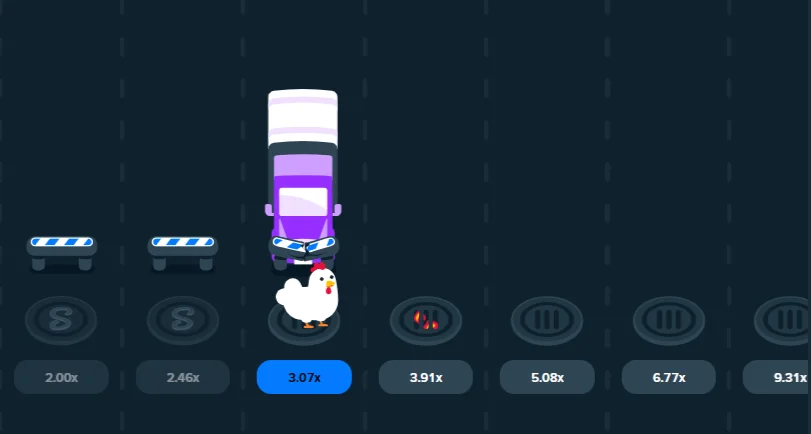
Stake Chicken is a high-tempo crash-style game from Stake Originals where a slightly reckless chicken tries to cross a multi-lane road at night. Every tile it steps on increases the multiplier. Every extra jump is another chance to win more or lose the entire stake in one hit. UK players like it because it is transparent, fast and brutally honest about risk and reward.
You control almost everything that matters. You choose the difficulty, the stake size and how far you let the chicken go before you cash out. The game uses a provably fair random number generator, and the maths sits at around 98% RTP, which means the house edge is just 2%. That is very competitive for an instant win title and makes Stake Chicken a serious option for players who enjoy high volatility but still care about long-term value.
What Is Stake Chicken?
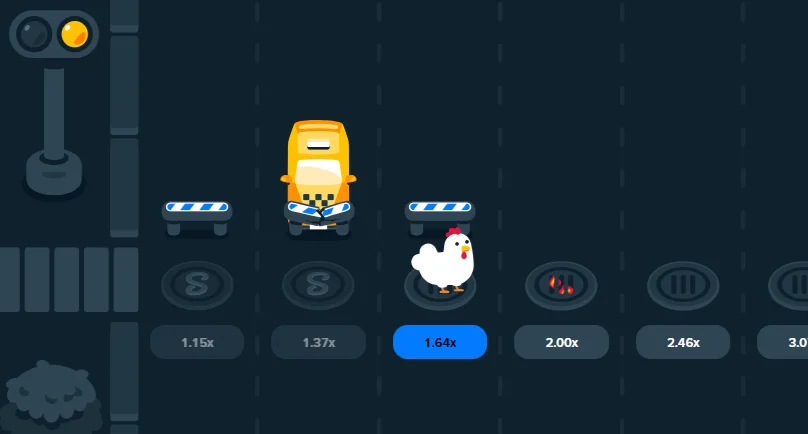
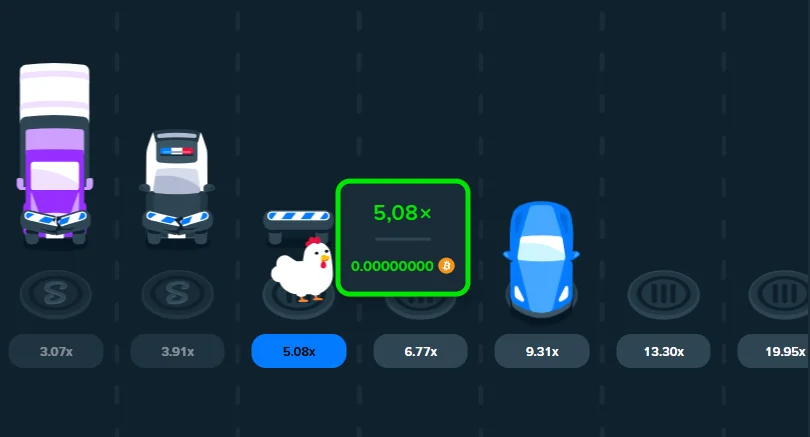
At its core, Stake Chicken is a game about knowing when to stop. Your chicken starts safely on the pavement. You place a bet, pick a difficulty level and send it onto the first tile. That tile carries a small multiplier. Each time you jump forwards, the multiplier gets larger. At any moment you can cash out and collect your stake multiplied by the current value. If the tile breaks or a car wipes out your chicken, the round ends immediately and the whole stake is gone.
- Genre: crash / risk ladder game.
- Theme: crossing a dark city road, dodging traffic.
- Key mechanic: move forward for higher multipliers or cash out now.
- Difficulty: four levels that change volatility and growth speed.
- RTP: 98.00%, house edge 2.00%.
- Fairness: provably fair RNG, every outcome can be verified.
Stake Chicken – Key Facts
| Provider | Stake Originals |
| Game type | Crash / instant game |
| RTP | 98.00% |
| House edge | 2.00% |
| Volatility | Player controlled, four levels |
| Mechanics | Step-based multiplier ladder |
The numbers tell only half the story. Stake Chicken feels different from most crash games because you see the chicken physically moving across the road, tile by tile. You are not just watching a line climb on a graph. You are watching a tiny character edge closer to danger with every tap. That small touch of personality makes the tension feel more real than yet another abstract multiplier bar.
How Stake Chicken Works in Practice
The flow of a round is always the same, which makes the game easy to learn. The variety comes from your choices – stake, difficulty and risk tolerance. Here is the basic loop that every UK player will follow:
- Choose a difficulty level. Easy, Medium, Hard or Expert. This sets the volatility and the shape of the multiplier curve.
- Set your stake. Decide how much you want to risk on the next crossing.
- Press the bet button. The chicken jumps to the first tile and the initial multiplier appears.
- Jump forwards or cash out. Each safe tile increases the multiplier. You can exit at any time for stake × multiplier.
- Face the consequences. If a tile breaks or a car hits, the round ends instantly and you lose the stake for that attempt.
Step-By-Step Guide for Your First Session
Step 1 – Start On Easy Or Medium
Even if you like volatile games, it makes sense to begin on Easy or Medium. These modes give you time to understand how quickly multipliers grow and how often tiles break before you move into more dangerous territory.
Step 2 – Pick A Modest Stake
Stake Chicken is built around fast rounds and progressive risk, so smaller bets go a long way. Choose a stake that feels almost boringly safe. You can always increase it later once you trust your own cash-out discipline.
Step 3 – Plan A Cash-Out Zone
Before you click anything, decide roughly where you want to cash out. For example, you might aim for x2–x3 on Easy or x3–x5 on Medium. A range is more realistic than a single magic number, because every round feels slightly different when you are in the moment.
Step 4 – Play A Batch Of Rounds
Run through a batch of ten to twenty rounds using the same stake and difficulty. Do not change anything mid-session. This gives you a clean feel for how the mode behaves without your own adjustments muddying the water.
Step 5 – Adjust If Needed
After that batch, look at your results. Did you stick to your plan or did greed and panic kick in? If you constantly hold on too long, reduce your target range. If you are always cashing out very early and feel frustrated, consider nudging the target slightly higher or dropping down a difficulty level so the swings are softer.
Theme, Graphics and Atmosphere
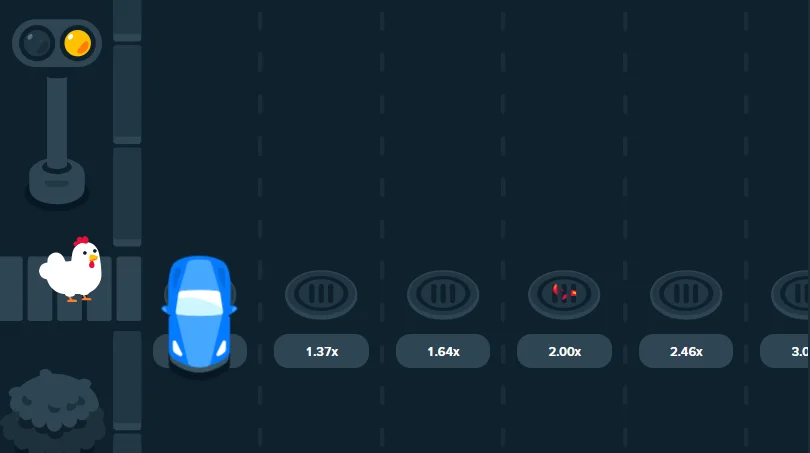
The theme is simple but effective. You control a cartoon chicken trying to cross a stylised road at night. Tiles act as stepping stones between the lanes. Headlights glow in the background, traffic flashes past and the whole scene has that slightly surreal “what am I doing with my life” energy that good crash games always capture.
Visually, Stake Chicken does not overload you. The focus is on the grid and the current multiplier, which keeps your eyes exactly where they should be when the pressure ramps up. Animations are smooth, the sound design is light and optional, and the interface feels clean on both larger screens and smaller laptops.
The atmosphere is relaxed until the moment you realise the next tile could turn a tidy win into a total wipe-out – that switch keeps Stake Chicken exciting long after the first session.
Impression from UK crash fans
Game Mechanics: Difficulty, Risk and Progression
Under the hood, Stake Chicken runs on a provably fair RNG that decides whether the next tile is safe or not. On top of that, the game adds a clear multiplier table that depends on the difficulty level. In easier modes the multipliers grow slowly and give you more time to exit. In harder modes the values increase very aggressively, so even a short run can produce extreme returns.
Because the multiplier values are fixed by the mode and the step number, the only unpredictable part is whether your chicken survives the jump. You always know exactly how much the next tile will pay if you make it. This combination of transparent numbers and hidden outcome is what makes Stake Chicken feel fair but still suspenseful.
Difficulty Levels Explained
Easy
Longer runs, smaller incremental multipliers and a calmer rhythm. Mistakes still cost money, but you have more time to react and more tiles that feel “safe enough” to step on.
Medium
A good middle ground. Multipliers build at a brisk pace and the threat level is noticeable without feeling cruel. Many UK players end up using this mode as their default.
Hard
Shorter crosses with multipliers that ramp up quickly. The risk curve is steep, so you get bigger highs and lows in fewer steps. Best approached with a clear budget and a cool head.
Expert
Designed for players who enjoy extreme volatility. Multipliers explode very early, but the chicken can be taken out just as quickly. Treat this mode like spicy food – fun now and then, not for every meal.
Autoplay: Build Your Own Strategy Script
Stake Chicken comes with an autoplay feature that lets you tell the game exactly how you want it to behave over many rounds. You decide the rules, and the system follows them without getting emotional or impatient. It is not a magic way to beat the house, but it does help you stick to a plan.
According to the in-game options, you can control:
- Total wagering amount for the autoplay session.
- Chosen volatility level so all rounds use the same difficulty.
- Number of jumps the chicken should attempt per round.
- Number of rounds to play before stopping automatically.
- Win and loss limits which trigger an early stop.
- Stake adjustments after a win or a loss, for example increasing by a fixed percentage after a win and resetting after a loss.
This level of control makes it easy to build conservative grinding routines or more daring “take a shot then stop” patterns. The crucial part is that you set everything up while you are calm, then let the script run without interference. If you keep overriding your own rules, the whole point of autoplay disappears.
Progressive Risk, Maximum Wins and RTP
Stake Chicken is built around the idea of progressive risk. With every jump forwards, your potential payout increases, but so does the danger. You feel that progression clearly. Early tiles fail less often and carry modest multipliers. Tiles further along the road feel like a coin flip between “massive hit” and “car bonnet”.
The 98% RTP figure means that, over a huge number of rounds, the game is expected to return 98% of all stakes to players collectively, with 2% kept by the house. In real sessions your results will swing far higher and lower than that average, especially in Hard and Expert modes, but it is reassuring to know the maths is not stacked aggressively against you from the start.
Importantly, the game uses a provably fair RNG. Each round is generated by a transparent algorithm that can be checked using seeds and hashes. That matters for UK players who are used to regulated markets and expect integrity from the games they spend time with.
Popular Stake Chicken Strategies
No strategy can guarantee profits in a game with a built-in house edge, but a good approach can make sessions smoother and more enjoyable. Here are a few styles that UK players tend to gravitate towards.
Early Cash-Out Grind
Stay on Easy or Medium, aim for very low multipliers – often just one or two safe tiles – and cash out almost immediately. You will miss those rare sky-high runs, but you also avoid many of the brutal crashes that come with chasing them. This style is ideal if you want long, low-stress sessions and steady, modest wins and losses.
Mid-Range Sweet Spot
Focus on the middle of the road – literally. In Medium or Hard mode, aim to cash out around the central tiles where multipliers are already attractive but not yet completely outrageous. You sacrifice the chance of absurd wins in exchange for more frequent medium-sized hits and a slightly calmer graph.
High-Volatility Hunts
Switch to Expert, accept that most rounds will end in flames, and use a small, fixed portion of your bankroll for “hero runs”. The idea is that one big win at a huge multiplier can pay for a string of failed attempts. This strategy is entertainment only – if you use money you cannot afford to lose, it stops being fun very quickly.
Structured Autoplay Routine
Use autoplay to run a strict script: for example, ten rounds in Medium mode, with the chicken taking three jumps each time and the stake increasing slightly after wins but dropping back after losses. Because the routine is pre-set, you avoid most of the impulsive “one more tile” decisions that usually hurt bankrolls.
Frequent Mistakes to Avoid
Stake Chicken is simple, but that does not mean it is easy. Most losses feel worse than they have to be because of human behaviour, not the maths. Here are mistakes that show up again and again.
- Chasing one unlucky round. A big near-miss can tempt you into doubling stakes or switching to Expert out of frustration. That almost always makes things worse.
- Moving up difficulty too quickly. Jumping from Easy straight to Expert without testing Hard is like skipping the shallow end of the pool.
- Changing the plan mid-session. You set a sensible cash-out range, then abandon it the first time you “feel lucky”. Over time this erases the benefit of having a plan at all.
- Ignoring session limits. Because rounds are fast, it is easy to burn through your budget without noticing. A simple “walk away” number written down beforehand goes a long way.
Why Stake Chicken Works Well For UK Players
Straightforward Design
Players used to the UK market are familiar with cluttered slot interfaces and complex bonus rounds. Stake Chicken is almost the opposite. It gives you one clear decision – cash out or risk another jump – and wraps it in clean visuals that never feel crowded.
Fair Maths With Real Volatility
The combination of a high RTP and adjustable volatility lets UK players choose whether they want a calmer grind or brutal swings. That sense of control matters in a regulated environment where people are increasingly picky about which games deserve their bankroll.
Stake Chicken FAQ
Is Stake Chicken rigged or is it fair?
Stake Chicken uses a provably fair random number generator. This means each round is created from a combination of server and client seeds that can be checked. The casino still has a small edge due to the RTP being 98%, but the outcomes themselves are not manipulated.
Can I always win if I use the right strategy?
No. No matter how clever your strategy seems, the house edge is always there in the long run. Strategies can help you manage volatility and avoid emotional decisions, but they cannot turn Stake Chicken into a guaranteed source of profit.
Which difficulty should I use as a beginner?
Most new players in the UK start on Easy or Medium. Both modes keep multipliers and risk under control while you learn how often different tiles succeed or fail. Once you feel comfortable, you can experiment with Hard for sharper sessions.
Is there a way to see how I have been playing?
Stake Chicken includes a basic round history which shows multipliers and results for recent attempts. It is a good idea to check this occasionally to see whether you are sticking to your own rules or constantly pushing your luck.
Is Stake Chicken suitable for short sessions?
Yes. Rounds are very quick, so you can fit a handful of attempts into a break. Just remember that the speed cuts both ways – it is easy to play more rounds than planned if you do not set a clear stopping point before you start.
Final Verdict – Is Stake Chicken Worth Playing?
Stake Chicken is one of the more interesting crash-style games available to UK players right now. It strips the concept down to its essentials – one chicken, one road, one rising multiplier – and lets you shape the risk profile with four clear difficulty levels. The combination of a high RTP, provably fair mechanics and sharp, memorable gameplay makes it well worth trying if you enjoy fast decisions and visible risk.
If you do give it a go, treat it like any good night out: set a budget, decide how wild you want the evening to be and know when to call it a night. Do that, and Stake Chicken can be a genuinely fun addition to your crash and arcade rotation rather than another source of stress.




Responsible gambling means enjoying gaming as a form of entertainment while staying in full control of your decisions. Set personal limits on time and spending, understand the risks involved, and recognise when it’s time to stop. Gambling should never be used to relieve stress or solve financial issues. If play stops being enjoyable, take a break or seek support from professional organisations dedicated to helping players maintain healthy, balanced gaming habits.
Address: 27 Marlborough Crescent, Sheffield, S11 4QP, United Kingdom